


Plastic Brains, Playful Hands: Why Neuroplasticity Loves Puzzles
- Dec 24, 2025
- 3 min read
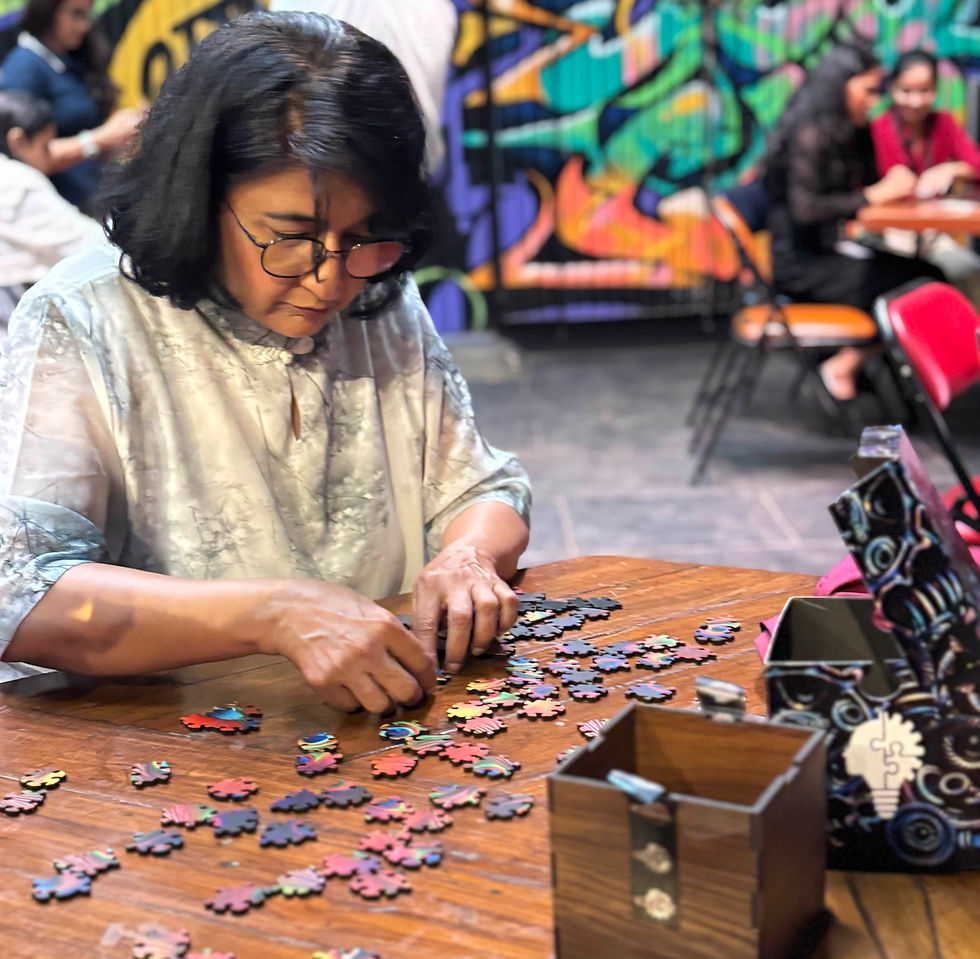
The adult brain is not fixed. It never has been. Yet billions of people still believe the myth that “once you’re grown up, your brain stops changing.” In reality, the brain is constantly rewiring itself through a process called neuroplasticity, the ability to form new pathways and strengthen old ones.
And one of the most powerful ways to activate cognitive flexibility? Not screens. Not productivity apps. But play—specifically, tactile puzzle-solving that engages your hands, senses, and full attention.
What Neuroplasticity Really Means for Adults
Neuroplasticity is your brain’s ability to adapt, learn, unlearn, and build resilience—at any age. Every new challenge, pattern, or sensory experience strengthens your neural network.
But here’s the catch: The brain rewires only when fully engaged, not when distracted or multitasking. That’s why passive scrolling weakens focus, while tactile play enhances it.
Why Puzzles Are a Neuroplasticity Superfood
Puzzles create the perfect environment for brain rewiring: structured challenge, sensory engagement, pattern detection, and sustained attention.
Puzzle-solving activates:
The hippocampus (memory formation)
The prefrontal cortex (planning & decision-making)
The parietal lobe (spatial reasoning)
The sensorimotor cortex (hand–mind synergy)
This multi-network activation is exactly what cognitive flexibility thrives on.
Research published in Frontiers in Human Neuroscience shows that hands-on puzzles improve cognitive flexibility, working memory, and sustained focus.
In simple words: puzzles make your brain sharper-not someday, but session by session.
How Circzles Trains the Brain Through Touch
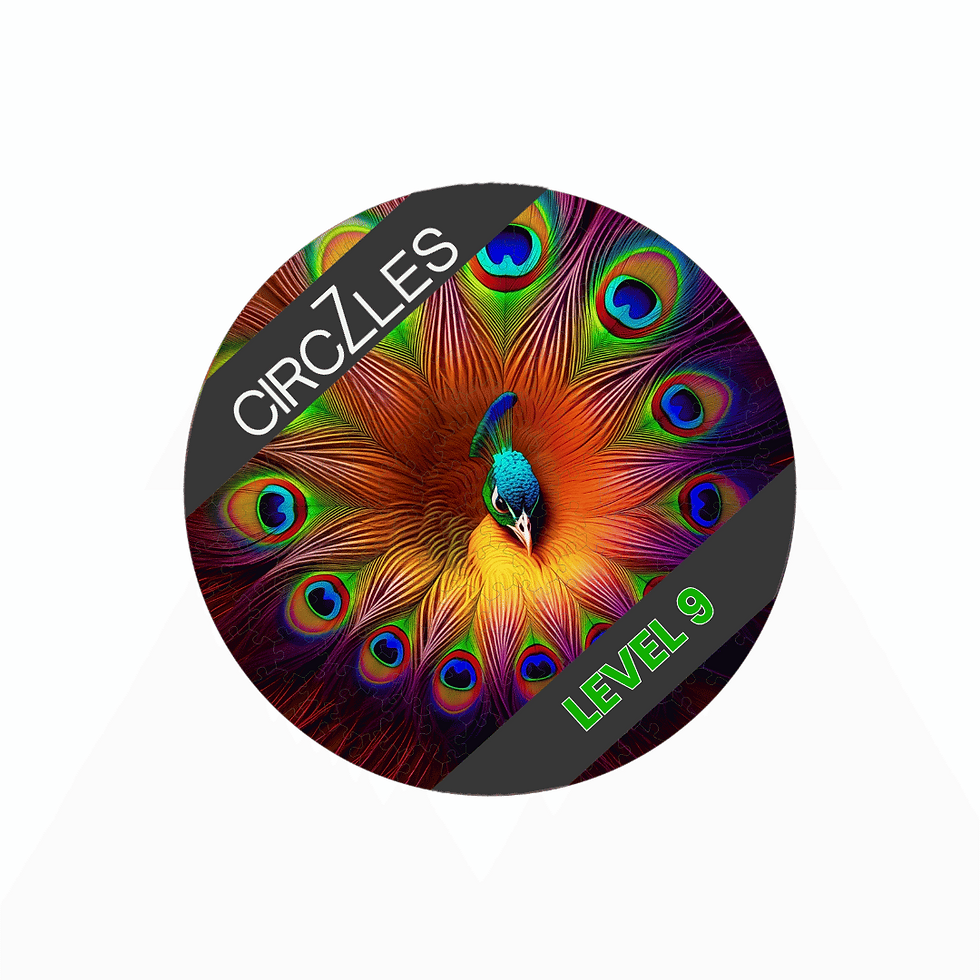
Cogzart’s Circzles were designed with neuroplasticity in mind.
Every rotation, alignment, and pattern forces your brain into deeper focus while your hands anchor you in the present moment.
What makes Circzles uniquely powerful:
Repetition without monotony: Each attempt builds familiarity and confidence.
Visual reasoning: Circular geometry engages both analytic and creative networks.
Flow induction: The steady motion triggers dopamine, helping the brain learn faster.
You’re not “just doing a puzzle.”
You’re literally teaching your brain to become more adaptable.

Coloring for Neuroplastic Calm: ACBs and Creativity
Cogzart’s Affirmative Coloring Books (ACBs) also stimulate neuroplasticity through a different pathway.
Coloring blends creativity with predictability. The act of choosing shades, staying within lines, and repeating strokes activates neural circuits linked to emotional regulation and fine motor skills.
Coloring strengthens:
Attention span
Emotion processing
Visual-motor coordination
Mindfulness and patience
The Chromatic Scale helps users track their artistic confidence—from beginner shades (Initiation) to richer, more experimental tones (Extreme Bondage).
Why Hands Make Learning Stick
Hands are the original learning tool.
Touch activates more brain regions than sight or sound alone, which is why tactile play creates deeper, longer-lasting neural changes.
When you engage your hands:
Stress pathways calm down
Focus increases
Memory improves
Creativity expands
This is adult brain training—playful, practical, and profoundly effective.
Neuroplasticity Loves Consistency, Not Complexity
You don’t need hours of brain games.
You need small, consistent tactile rituals:
One Circzles level in the morning
One ACB motif during a break
One Chromatic Scale check-in at night
These micro-moments strengthen neural pathways day by day.
Neuroplasticity isn’t built through pressure or performance. It grows through gentle challenge, repetition, and presence. When your hands are engaged and your mind is curious, the brain does what it does best: adapt, strengthen, and evolve. Sometimes, the smartest thing you can do for your brain is simply to play.
Citations:
Ballesteros S, Voelcker-Rehage C, Bherer L. “Cognitive and Brain Plasticity Induced by Physical Exercise, Cognitive Training, Video Games, and Combined Interventions.” Frontiers in Human Neuroscience, 2018;12: 169. Frontiers
“New rules for the game of memory.” University of Chicago / ScienceDaily. March 24 2025: Highlights how hippocampal synaptic plasticity continues to change even after learning. ScienceDaily+1






Comments