


Mental Fatigue Recovery: When Rest Is Not Enough

Sleep can rest the body, but the mind may still feel overloaded.
Mental fatigue often builds after long hours of processing information, making decisions, switching between tasks, and reacting to constant alerts.
That is why Mental Fatigue Recovery matters. It is not about doing nothing. It is about giving the brain space to step away from overstimulation and return to clearer focus.
What Causes Mental Fatigue Recovery Challenges?
Modern life places the brain in a constant state of input.
Some common contributors include:
Endless screen time
Back-to-back meetings
Multitasking
Social media consumption
Information overload
Lack of focused downtime
When cognitive overload becomes a daily habit, Mental Fatigue Recovery becomes harder because the brain struggles to shift into recovery mode.
Why Passive Scrolling Blocks Mental Fatigue Recovery
Many people reach for their phones when they feel mentally drained.
Unfortunately, scrolling often adds more information instead of reducing it.
The brain continues to:
Process new images
Evaluate content
Switch attention rapidly
Absorb emotional stimuli
Instead of restoring focus, the mind remains active.
That is why screen-free activities often feel more refreshing and support Mental Fatigue Recovery better than digital entertainment.
How CogZart Supports Mental Fatigue Recovery
CogZart experiences are designed around curiosity, focus, and mindful engagement.
Instead of demanding speed, they encourage observation.
Instead of endless stimulation, they encourage presence.
Working with carefully designed hexes helps the mind:
Slow down
Focus on one task
Practice patience
Follow visual clues
Experience small moments of achievement
This creates a healthier relationship with attention and makes Mental Fatigue Recovery feel more intentional.
Why CircZles Create a Deeper Reset
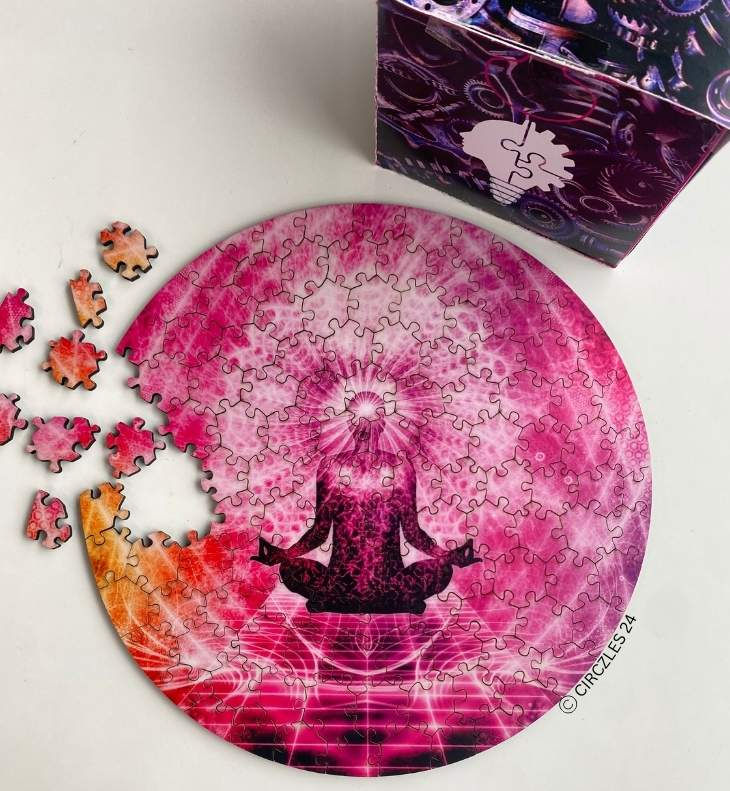
CircZles are not ordinary challenges. They are circular wooden experiences built with a hexagonal grid, where every hex connects through colour, shape, symbol, or story.
CogZart stages make this journey richer:
Colourful: beginner-friendly, fast-paced puzzles with non-abstract visuals for an engaging and satisfying challenge. Cosmic Walk
Monochrome: Calm, contrast-based puzzles designed to relax the mind while sharpening observation. Pluto
Repetitive: Pattern-heavy puzzles built on repetition that test memory, focus, and subtle change detection. Alpha Blue
Minimal: Stripped-down puzzles that challenge logic and perception through simplicity and reduction. Metamorphosis
True Tone: High-difficulty single-colour puzzles that demand deep focus and advanced cognitive control. Abyss
This makes Mental Fatigue Recovery feel less like another task and more like entering a focused world designed for calm discovery.
A 15-Minute Recovery Ritual
Try this simple routine:
Turn off notifications
Move away from all screens
Take three slow breaths
Sort hexes by colour or pattern
Focus on one small section
Stop when you feel refreshed
The goal is not completion.
The goal is restoration.
Why Recovery Matters
Mental performance is not built through constant effort. It is built through cycles of focus and recovery.
When recovery becomes intentional, attention improves, stress feels more manageable, and creative thinking becomes easier.
That is why Mental Fatigue Recovery should be treated as a daily habit rather than an occasional solution.
Recover with purpose. Explore CogZart for screen-free moments of focus, creativity, and renewal.
Citations
American Psychological Association – Stress Effects on the Body https://www.apa.org/topics/stress/body
National Institute for Occupational Safety and Health (NIOSH) – Workplace Stress https://www.cdc.gov/niosh/stress/
World Health Organisation – Mental Health at Work https://www.who.int/news-room/fact-sheets/detail/mental-health-at-work




Comments