


Your Brain on Swipe Mode: Why Constant Stimulation Is Killing Deep Attention
- Jan 5
- 2 min read

Welcome to Swipe Mode Thinking
Your brain didn’t evolve for infinite feeds. Yet every day, it’s forced to jump between reels, notifications, texts, headlines, and pop-ups—often within seconds.
This mental state has a name: attention fragmentation.
It’s when your focus is repeatedly broken into tiny, shallow bursts. You’re not fully distracted—but you’re never fully present either. The result feels like productivity without progress and rest without restoration.
What Is Attention Fragmentation (and Why It Feels Exhausting)?
Attention fragmentation happens when your brain is trained to constantly switch, instead of sustain.
Swipe-based digital environments condition your mind to:
abandon tasks quickly
crave constant novelty
feel uncomfortable with slow or single-point focus
Over time, this leads to:
mental fatigue even after “light” screen use
difficulty finishing tasks without checking your phone
a sense that your thoughts never fully settle
Your brain isn’t broken. It’s overstimulated and under-anchored.
Why Multitasking Isn’t the Problem—Micro-Switching Is
Most people blame multitasking. But the real issue is micro-switching—the rapid, unconscious jumping between stimuli.
Every switch:
costs mental energy
disrupts memory consolidation
weakens sustained attention pathways
Even when you’re “relaxing” on your phone, your brain stays in a low-grade alert state. There’s no true recovery—only constant partial engagement.
This is why scrolling often leaves you more drained than before.
The Missing Ingredient: Anchored Attention
To recover from attention fragmentation, your brain needs anchored attention—focus that rests on one physical, predictable activity.
This kind of attention:
slows neural firing
reduces cognitive noise
strengthens focus endurance
Importantly, it doesn’t come from forcing concentration. It comes from engaging the hands.
How Screen-Free Play Rebuilds Attention Capacity
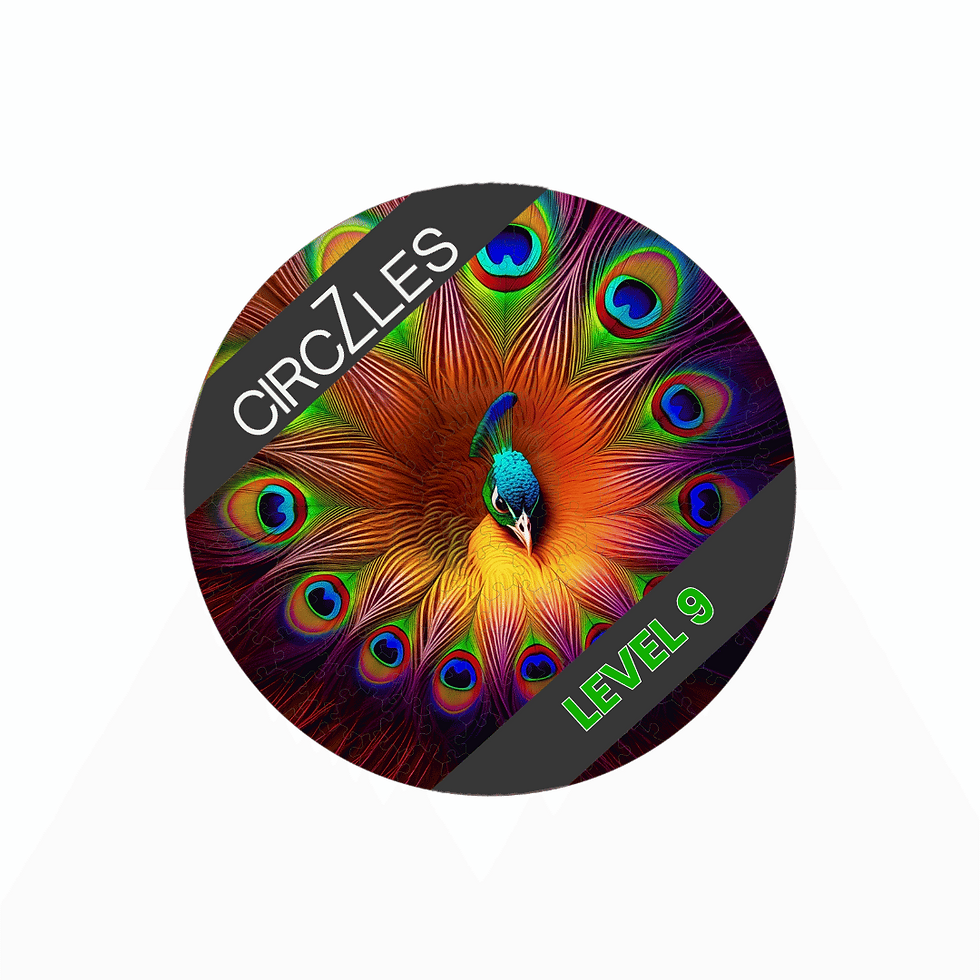
Circzles puzzles require:
spatial reasoning
pattern recognition
continuous hand-eye coordination
As you rotate and align pieces, your brain naturally settles into a single stream of attention. The Chromatic Scale reflects this progression—moving from light engagement to deeper cognitive immersion.
There’s stimulation, but it’s contained and constructive, not endless and fragmented.

Coloring restores attention through:
rhythmic repetition
visual continuity
emotionally grounding affirmations
Unlike digital visuals that demand reaction, coloring invites presence. Your mind stays with one page, one pattern, one moment—long enough to actually reset.
Small Shifts That Reduce Attention Fragmentation
You don’t need extreme rules. You need better replacements.
Try this:
Replace one scroll break with one Circzles attempt.
Keep an ACB page nearby during work pauses.
End the day with tactile play instead of passive content.
These micro-rituals teach your brain that focus can feel safe again.
Rebuilding Focus Is a Skill—Not a Detox
Attention fragmentation isn’t solved by quitting technology. It’s solved by training attention back into your nervous system.
At Cogzart, we design tools that help your brain practice:
staying
finishing
settling
Because focus isn’t about discipline. It’s about giving your mind something worth staying with.
Your Mind Matters
Screens will always compete for your attention. But you get to decide what trains it.
Less swipe.
More substance.
More play with purpose.
Citation:
Upshaw JD, Stevens CE Jr, Ganis G, Zabelina DL. “The hidden cost of a smartphone: The effects of smartphone notifications on cognitive control and attention.”PLOS ONE (2022). Know more
Difficulty in Attention Switching and Its Neural Basis in Problematic Smartphone Use.”
Brain Sciences (2025). Know more






Comments